
The role of the Asset Manager in urban regeneration.
Expertise
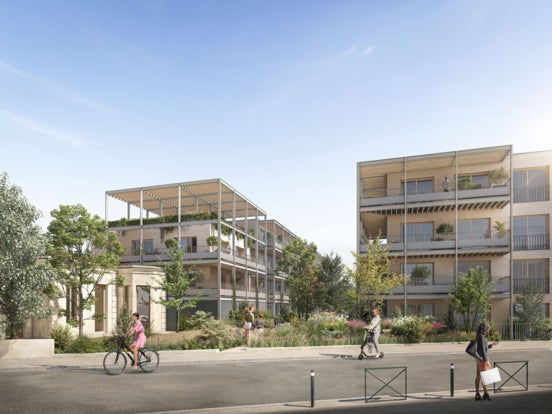
For a long time, asset management was primarily associated with managing property performance. Maximising income, optimising costs and managing asset value were the main indicators of success. Today, expectations are broader. Cities are evolving, uses are changing, and environmental issues are emerging as essential criteria in property strategies.
In this context, the asset manager occupies a new role. Beyond simply managing assets, they now help to shape their development and define their role in the city of tomorrow. This is because every property-related decision can have an impact on a region’s appeal, the quality of life of its residents and the way in which spaces will be used in the years to come.
Property assets at the heart of regional dynamics
Property assets are no longer isolated from their surroundings. They form part of complex urban ecosystems where economic issues, transport, housing, retail and services intersect.
In this context, decisions taken regarding a property extend far beyond its immediate boundaries. Transforming a site, diversifying its uses or rethinking its positioning can help revitalise a neighbourhood, support the development of a region or meet new local needs.
Asset Management operates precisely at this interface between property strategy and urban development. Its role is to analyse changes in the local area in order to identify the most appropriate paths forward for the properties and the communities surrounding them.
As Franck Scalabre, Head of Asset Management at Nhood, points out: “Today, a property can no longer be considered in isolation from its surroundings. Every decision taken at a site has repercussions for its local area, its uses and its appeal. Asset Management must incorporate this dimension into its thinking.”
Anticipating uses rather than reacting to changes
One of the asset manager’s key tasks is to take a long-term view. Property assets are designed to last for several decades, whilst uses can evolve much more rapidly.
Remote working, new forms of mobility, the desire for local amenities, mixed-use development and environmental expectations are profoundly changing the way places are perceived and used.
Faced with these transformations, the challenge is no longer simply to adapt assets when they become obsolete. It is to anticipate changes so that we can build spaces today that are capable of meeting tomorrow’s needs.
This ability to anticipate is one of the key drivers of sustainable value creation.
Supporting the transformation of sites into living spaces
Many properties are currently undergoing profound transformations. Sites historically dedicated to a single function are gradually evolving into mixed-use spaces combining retail, housing, offices, services, leisure facilities and public amenities.
This shift responds to a growing demand for local amenities and a diversity of uses.
For the Asset Manager, these transformations represent much more than a property development. They enable the role of assets within their environment to be reimagined and strengthen their contribution to the vitality of local areas.
Value creation is therefore no longer measured solely in terms of economic performance. It is also assessed by a project’s ability to generate uses, attractiveness and sustainable benefits for its surroundings.
“Urban transformation is not just about reinventing buildings. It is about imagining new uses and creating places capable of meeting the needs of residents, local authorities and users in a sustainable way,” says Franck Scalabre.
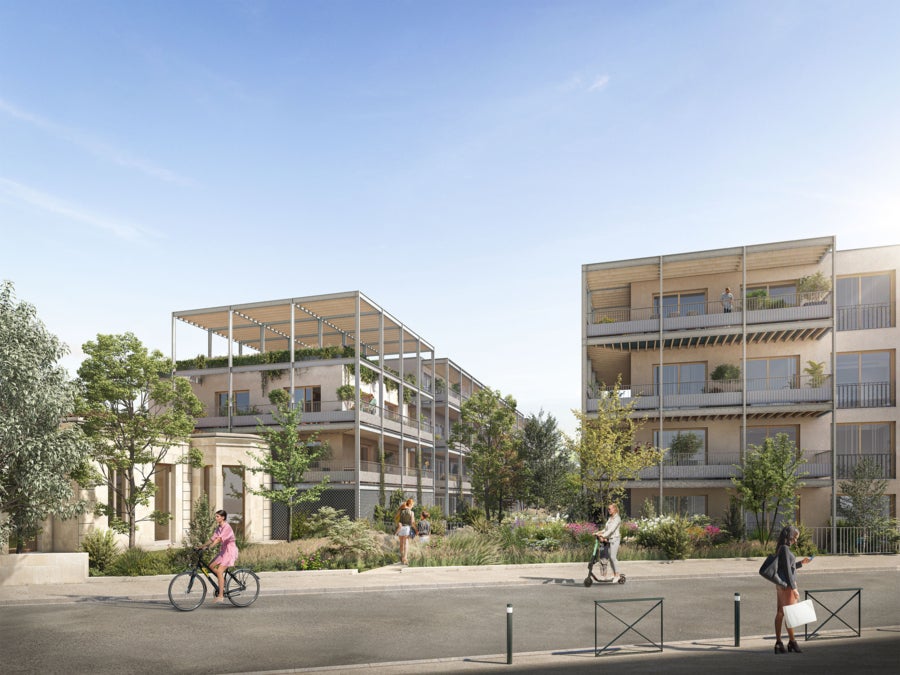
Shaping a future aligned with tomorrow’s challenges
Environmental challenges now occupy a central place in property strategies. Reducing the carbon footprint, efficient land use, resource conservation and adaptation to climate change directly influence investment and regeneration decisions.
Asset Management plays a decisive role in this evolution by integrating these dimensions into asset development strategies.
The aim is no longer simply to ensure their economic performance. It is also to guarantee their relevance in a changing world.
Aligning property performance with the public interest
Asset Management is often seen as a discipline focused on creating financial value. This mission remains essential. However, it is now part of a broader vision in which an asset’s performance is closely linked to its ability to meet the needs of local communities and their residents.
The role of the asset manager is therefore to bring together several objectives: those of investors, those of users and those of local authorities.
For urban transformation is not merely about building new projects. It relies on the ability to intelligently adapt existing spaces so that they continue to create value over the long term.
In a context where cities are reinventing themselves, Asset Management thus emerges as a key player in urban transformation, capable of linking property strategy, regional vision and the creation of sustainable value.